
















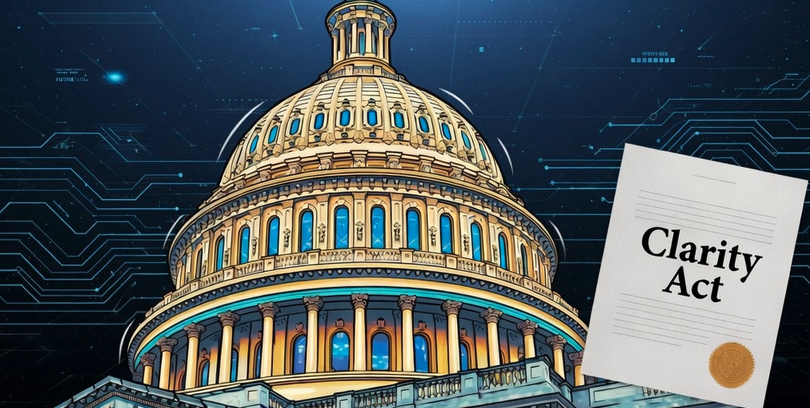
Several U.S. law enforcement groups are raising concerns about a section of the Clarity Act, arguing it could make it more difficult to investigate illicit activity involving crypto.
In a letter sent to federal officials this week, organizations representing prosecutors, police chiefs, and sheriffs warned that Section 604 may create gaps in oversight by limiting how certain participants in the digital asset sector are regulated.
“Regulatory certainty should not come at the expense of accountability, transparency, victim protection, or public safety.”
The controversial provision would prevent non-custodial software developers, open-source contributors, and some decentralized finance infrastructure providers from automatically being treated as money transmitters.
Industry Pushes Back
Supporters of the Clarity Act argue critics are misunderstanding the proposal. According to industry advocates, Section 604 only protects developers who do not hold customer funds or control transactions.
Backers also stress that the measure does not shield criminals from prosecution or interfere with investigations involving money laundering, fraud, sanctions violations, or terrorist financing.
Human Trafficking Advocates Voice Similar Concerns
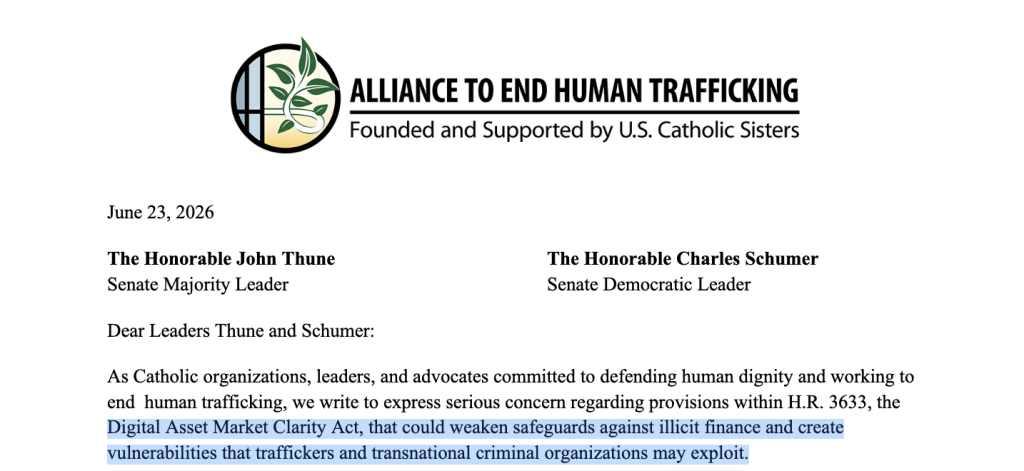
The debate has also drawn attention from the Alliance to End Human Trafficking, which urged lawmakers to revisit the provision. The group argues that broad exemptions could make it harder to track financial activity linked to human trafficking, organized crime, and child exploitation.
As discussions continue in Washington, the Clarity Act remains a key piece of legislation that could shape the future regulatory framework for crypto in the United States.
Disclaimer: This content does not constitute trading or investment recommendations. It’s essential to conduct your own research before purchasing any cryptocurrency or investing in any services.