

















Ethereum’s supply on centralized exchanges has dropped to its lowest level since 2016, signaling a shift toward long-term holding. Data shows balances have fallen to 14.8 million ETH, as billions worth of tokens moved into ETFs, treasuries, and private storage.
Long-Term Holders Drive the Trend
The decline in exchange reserves has been ongoing since 2020, but it has accelerated in recent months. Analysts note that Ethereum outflows reached one of the steepest levels seen in nearly a decade, reducing liquid supply and tightening market conditions.
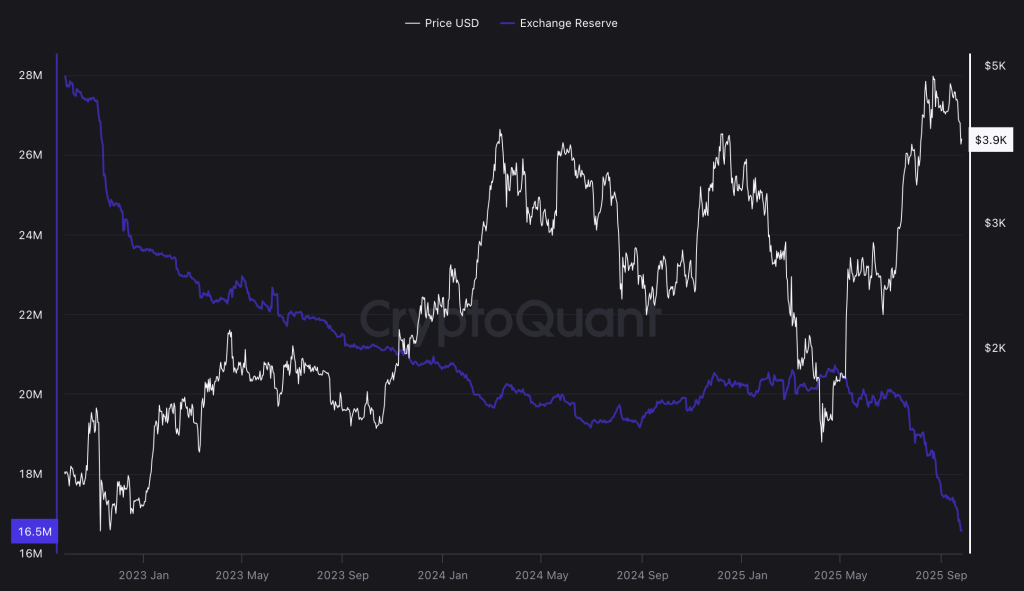
Institutional adoption is playing a major role. Spot Ethereum ETFs now hold more than 6.7 million ETH, worth nearly $28 billion. Meanwhile, corporate treasuries and organizations have collectively acquired millions of coins, locking them away from immediate circulation.
Supply Pressure and Market Impact
A shrinking pool of exchange-held ETH means less selling pressure in the near term. When tokens are moved into staking, ETFs, or cold storage, they become less likely to hit the open market. This dynamic often creates conditions for upward price momentum if demand continues to rise.
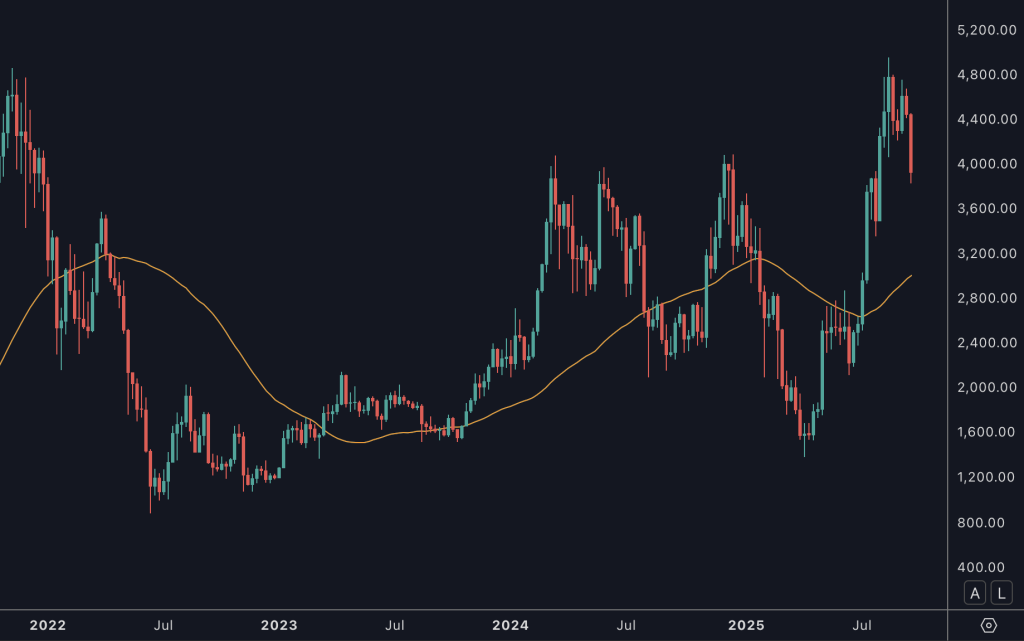
Ethereum dipped below $4,000 earlier today, triggering liquidations but also attracting buyers. New wallets collectively purchased over 200,000 ETH, highlighting renewed confidence in the asset.
Market strategist Ted summed it up:
“ETH is going above $10,000 this cycle. But before that, a correction will happen, and right now, it’s happening. I think ETH could drop towards the $3,600-$3,800 level before a reversal and a new ATH.”
Disclaimer: This content does not constitute trading or investment recommendations. It’s essential to conduct your own research before purchasing any cryptocurrency or investing in any services.