

















The Commodity Futures Trading Commission is moving toward turning its recent stance on Phantom into actual rules, something that could reshape how Crypto wallet builders operate in the U.S.
Speaking at Consensus Miami, chair Michael Selig made it clear the agency doesn’t want to rely on one-off relief anymore. The goal now is simple: write it into law and give developers clearer ground to stand on.
What the Phantom decision really means
Back in March, the CFTC issued a “no-action” letter to Phantom Technologies. In plain terms, it said the company wouldn’t face enforcement for skipping broker registration, as long as it sticks to certain conditions.
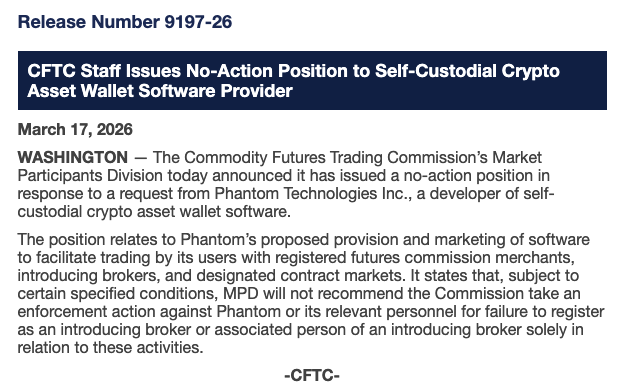
The key detail? Phantom doesn’t hold user funds. It just provides the tools.
That line, between software and financial intermediary, is becoming central. If a wallet simply connects users to trading platforms without custody, regulators may treat it very differently from a traditional broker.
From exception to rulebook
Right now, that protection only applies to Phantom’s specific case. But the CFTC wants to expand it into a broader framework.
Selig hinted this would happen in stages, giving companies time to adapt while building clearer expectations around how Crypto products should be structured in the U.S.
No draft rules yet, but once they arrive, public feedback will likely shape the final version.
Pressure building across regulators
It’s not just the CFTC. The U.S. Securities and Exchange Commission has also started outlining how platforms and interfaces tied to digital assets should be treated.
That guidance is still temporary, but major industry players are already pushing for something more permanent, especially around non-custodial tools that simply pass user instructions onto blockchains.
Another battle: prediction markets
Selig also touched on a separate fight brewing in parallel. The CFTC continues to push back against states trying to regulate prediction markets on their own.
The agency’s position is firm: these markets fall under federal oversight, not a patchwork of state laws. Lawsuits against multiple states, and even New York, show this isn’t just talk.
Disclaimer: This content does not constitute trading or investment recommendations. It’s essential to conduct your own research before purchasing any cryptocurrency or investing in any services.