

















Miner Capitulation Could Be Laying the Groundwork for a Bitcoin Bottom, VanEck Suggests
Recent network data points to renewed stress among Bitcoin miners, a development that some analysts believe could be signaling a potential market bottom.
According to VanEck’s latest analysis, Bitcoin’s hashrate fell by roughly 4% over a 30-day period ending in mid-December. This marked the sharpest monthly decline since April of the previous year and reflects a phase commonly known as miner capitulation, when mining operations shut down because operating costs outweigh profitability.
Why Miner Capitulation Often Matters for Bitcoin
While declining hashrate can appear negative at first glance, historical patterns tell a more nuanced story. VanEck examined Bitcoin data going back to 2014 and found that periods of notable hashrate contraction have frequently been followed by price strength. In many cases, Bitcoin recorded gains within the next 90 days, with the probability of a rebound estimated at around 65%.
Over longer time horizons, this behavior has repeated itself, suggesting that miner capitulation often coincides with market resets rather than prolonged weakness. These phases can act as pauses where excess leverage and inefficiencies are cleared before the next trend develops.
Market Cooling May Be a “Natural Cleansing”
After a strong rally earlier in the cycle, Bitcoin has recently gone through a meaningful correction. This pullback has tempered investor sentiment, moving the market away from extreme optimism. Such conditions are often described as a “natural cleansing”, allowing supply and demand dynamics to stabilize.
As financially strained miners reduce or halt operations, the forced selling of Bitcoin tends to slow. When that pressure fades, the market may find room to establish a more durable base.
Shifting Dynamics: Mining, AI, and Broader Risks
Some miners have already begun reallocating infrastructure toward artificial intelligence workloads, attracted by significantly higher revenue potential compared to traditional Bitcoin mining. Estimates suggest these operations could generate tens of billions of dollars annually, with returns far exceeding those of mining alone.
At the same time, concerns remain. Industry leaders have cautioned that an overheated AI sector could pose indirect risks to Bitcoin in the coming years if excessive speculation leads to a sharp market correction.
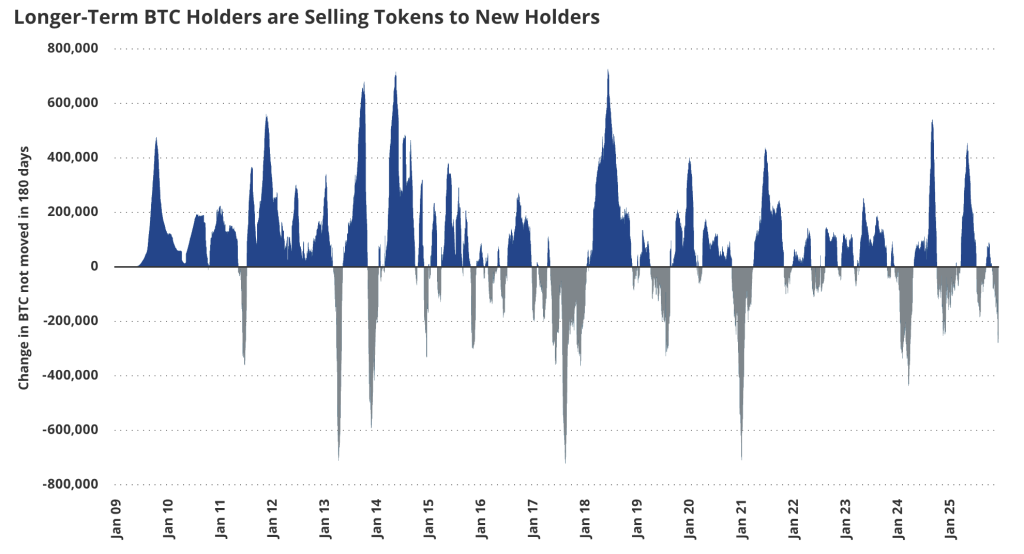
Meanwhile, separate market research indicates that selling pressure from long-term Bitcoin holders may be nearing exhaustion. As older supply becomes less active and distribution slows, the balance between buyers and sellers could shift once again.
Bitcoin Price Snapshot
At the time of writing, Bitcoin is trading near $87,460, reflecting a 1.23% decline over the past 24 hours. Daily spot trading volume stands at approximately $6.55 billion, indicating steady but cautious market participation.
Disclaimer: This content does not constitute trading or investment recommendations. It’s essential to conduct your own research before purchasing any cryptocurrency or investing in any services.